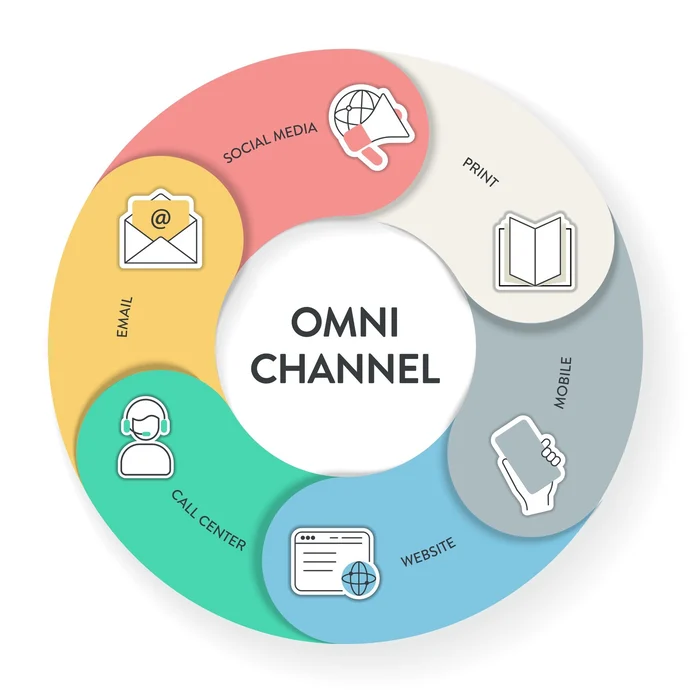
The modern consumer journey is chaotic. It is no longer a straight line from discovering a product to making a purchase. Today, a potential customer might see your targeted video ad on TikTok during their morning commute. At lunch, they might Google your brand name to read reviews. Two days later, an Instagram retargeting ad reminds them of the product they viewed. Finally, on a Sunday evening, they sit down at their laptop, type in your website URL directly, and complete the purchase.
If any single touchpoint in that fragmented, multi-day journey feels disjointed, confusing, or off-brand, the customer will abandon the process.
Many businesses treat their digital marketing efforts as isolated departments. The web development team builds the website, the media buyer runs the Google Ads, and the social media manager posts to Instagram. When these channels operate in silos, the resulting customer experience is jarring.
To maximize revenue and build lasting brand loyalty, you must break down these silos and orchestrate an Omnichannel Strategy. This approach ties all of your digital services—SEO, SEM, web development, social media, and analytics—into a unified, seamless trust-building loop. Here is exactly how a cohesive omnichannel strategy transforms disjointed clicks into massive, predictable sales.
Multichannel vs. Omnichannel: Understanding the Difference
Before building a cohesive strategy, we must define what omnichannel actually means, as it is frequently confused with "multichannel" marketing.
|
Feature |
Multichannel Marketing |
Omnichannel Marketing |
|
The Core Focus |
The Brand (Maximizing reach across platforms) |
The Customer (Maximizing the user experience) |
|
Structure |
Siloed. Each channel operates independently with its own goals. |
Integrated. Channels share data and work together to drive a single goal. |
|
Messaging |
Repetitive. Broadcasting the exact same message everywhere. |
Sequential. The message adapts based on the user's previous interactions. |
|
The Result |
A fragmented, often repetitive user experience. |
A frictionless, highly personalized journey. |
Being on every platform does not mean you have an omnichannel strategy. True omnichannel marketing means that if a customer puts a pair of shoes in their cart on your mobile app, those exact shoes follow them to their desktop browser, and the Facebook ad they see an hour later offers a 10% discount on that specific pair, rather than a generic brand awareness video.
The Psychology of Cohesion and the Trust Loop
Why is this level of integration so critical for generating sales? It comes down to basic human psychology and a concept called cognitive fluency.
Cognitive fluency refers to how easy it is for the human brain to process information. We subconsciously prefer things that are easy to think about. When your brand's visual identity, tone of voice, and core messaging are perfectly consistent across an Instagram ad, a Google search result, and a website landing page, the user's brain processes that information effortlessly.
This ease of processing breeds familiarity, and familiarity breeds trust.
The Trust-Building Loop: Consistency creates predictability. Predictability creates trust. Trust creates conversions.
Conversely, if a user clicks an ad that features bright, playful colors and a humorous tone, but lands on a website that is stark, corporate, and written in dense jargon, cognitive friction occurs. The user's brain immediately senses that something is wrong. They feel "bait-and-switched," their trust evaporates, and they bounce from the page.
Aligning PPC Ads with Web Development (The Conversion Bridge)
The most expensive disconnect in digital marketing happens between the advertisement and the website. You can have the most highly optimized Google Ads (PPC) campaign in the world, but if the web development does not support the ad's promise, your budget is wasted.
An omnichannel approach bridges this gap through absolute alignment.
Message Match
The headline of your landing page must perfectly mirror the headline of the ad that drove the user there. If your ad promises "24/7 Emergency Plumbing Services in Los Angeles," the first text the user sees on the website must not be a generic "Welcome to Smith Plumbing." It must explicitly restate the 24/7 emergency offer. This reassures the user that they are in exactly the right place.
Design Continuity
Visual cues matter. If you are running a Meta Ads campaign featuring a specific color palette, typography, and a distinct hero image, that exact visual language must be present on the destination URL. A seamless visual transition lowers bounce rates dramatically.
Technical Handoff
Omnichannel integration also means the underlying technology works in harmony. If an ad campaign targets mobile users, the web developer must ensure the destination landing page is aggressively optimized for mobile speed and features one-click "Apple Pay" or "Google Pay" functionality to remove all friction from the checkout process.
Integrating Social Media into the Omnichannel Web
Social media is often treated strictly as a top-of-funnel awareness tool, but in an omnichannel ecosystem, it is the glue that holds the entire customer journey together.
Social as the "Proof" Engine
When a user sees a Google Ad for your product, they will often leave the search engine and go to Instagram or TikTok to see if your brand is legitimate. Your social media presence serves as the social proof that validates the claims made on your website. The aesthetic and the value propositions must align seamlessly. If your website claims you are a "cutting-edge luxury brand," but your social media is full of blurry, low-effort photos, the illusion shatters.
Intelligent Retargeting Loops
An omnichannel strategy leverages data to create highly relevant social media touchpoints. Using tools like the Meta Pixel or the Conversions API, your website communicates directly with your social platforms.
- If a user reads three blog posts about "Local SEO Services" on your website, your social media channels should automatically serve them LinkedIn case studies proving your success in Local SEO.
- You are no longer guessing what the user wants; your website data is dictating the social media content they receive.
Unified Brand Voice
Whether a customer is reading a 2,000-word SEO article, watching a 15-second TikTok Reel, or chatting with customer support via Instagram DMs, they should feel like they are interacting with the exact same entity. A cohesive brand voice builds a parasocial relationship that traditional, disjointed marketing cannot replicate.
Data Analytics: The Invisible Glue
You cannot create a seamless experience if you do not understand how your users are navigating your digital ecosystem. Data analytics is the invisible thread that ties web development, PPC, and social media together.
Multi-Touch Attribution
In a siloed setup, the Google Ads manager claims a sale came from search, the Social Media manager claims it came from an Instagram post, and the SEO team claims it was organic. They are all looking at partial data.
An omnichannel approach utilizes advanced platforms like Google Analytics 4 (GA4) to map the entire multi-touch conversion path. You stop fighting over who gets the "credit" for the sale and start understanding the sequence of events that predictably drives revenue.
Continuous Optimization
When all teams share the same data pool, optimizations become exponentially more powerful.
- Your SEM team notices a specific long-tail keyword is converting incredibly well in Google Ads.
- They share this data with the Web Development and SEO teams, who immediately build a permanent, organic landing page around that exact keyword.
- They also share it with the Social Media team, who creates an educational video directly answering the intent behind that search query.
This is the omnichannel machine in action. A single data point cascades across every department, lifting the performance of the entire brand.
Building Your Omnichannel Machine
Transitioning from a fragmented marketing approach to a unified omnichannel strategy does not happen overnight. It requires a deliberate operational shift.
Step 1: Audit Your Current Touchpoints
Click your own ads. Navigate your own website on a mobile phone. Send a DM to your own business page. Document every point of friction, every inconsistent message, and every broken link. You must experience your brand exactly as your customers do to identify the leaks in your funnel.
Step 2: Centralize Your Brand Guidelines
Create a definitive, non-negotiable brand rulebook. This document must contain your exact color hex codes, approved typography, tone of voice guidelines, and core value propositions. Every single piece of digital collateral—from a web banner to a TikTok caption—must be checked against this document before publishing.
Step 3: Break Down Internal Silos
If you have an in-house team, force your developers, copywriters, media buyers, and social managers into the same room. They must plan campaigns collaboratively from day one. If your web developer does not know what the PPC manager is running next week, your strategy is already failing.
The All-In-One Agency Advantage
Executing a true omnichannel strategy is logistically complex. It requires multiple disciplines—coding, data analysis, copywriting, graphic design, and media buying—to operate in perfect, daily synchronization. For most businesses, managing this level of integration internally is overwhelmingly expensive and operationally exhausting.
This is exactly why partnering with a comprehensive digital marketing agency like Go Citrine makes financial and strategic sense.
At Go Citrine, we do not operate in silos. We are an integrated team of specialists based in California, offering SEO, SEM, PPC, web development, social media management, and advanced analytics all under one roof. When you launch a campaign with us, our developers ensure the landing page is blazing fast, our media buyers dial in the perfect ad targeting, and our social team orchestrates the retargeting loop.
We build the cohesive, frictionless digital experiences that modern consumers demand. Stop losing customers to a fragmented digital journey. Contact Go Citrine today, and let us tie your digital presence together into a seamless, high-converting revenue engine.